History of the Castle
1968
Son :
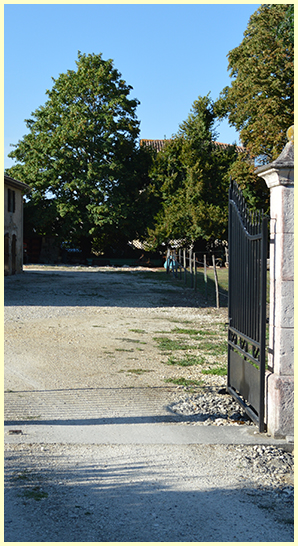
Bruno-Pierre Caussan: A winegrower, he lived in the village of Lussan throughout his childhood. The family home (bought at auction in 2024 by Bruno and his son Valentin) is located directly opposite the Lussan winery, both built by Bruno's great-great-grandfather. At the time, the farm was used for cattle breeding. Relatively early on, thanks to his early success as a young farmer and his hard work, he decided to take over the business, initially working with his mother. He soon bought out her share and ran the small property on his own. In 1990, he personally acquired the buildings, which were quite dilapidated at the time, and converted them into a winery. In 2001, the business he owned also purchased the winery.
In his early days, for two years, he worked as a "family helper," tending his parents' 5 hectares of vineyards. The grapes were taken to the cooperative winery under the name Château Lagardieu. He later bought this vineyard from his parents and incorporated it into his Earl Caussan winery. Gradually, he planted vines on land that was initially fallow within the Médoc appellation. Extensive work began, as the soil was riddled with limestone rocks. This arid terroir, so ideal for vines, consumed almost all of his time. He finally managed to plant his first plots in the early 1990s (Château de Lussan). Little by little, the estate grew, expanding from 5 to 14 hectares in less than 10 years. Beautiful plateaus were planted, very close to renowned vineyards. The well-situated plots allow the vineyard to produce very high-quality harvests. Today, only 8 hectares of vines produce Château de Lussan wines; the estate has been reduced in size for quality reasons. The winery and all the winemaking equipment have been replaced over the years with stainless steel materials that meet food and safety standards. Twenty percent of the French oak barrels are renewed annually to allow the wine to benefit from a rich interaction with the wood.
In 2006, Bruno and his wife Aline built their house in the orchard of the estate they own, right next to the cellars. They both take great care of the estate buildings, which have benefited from many years of renovations.
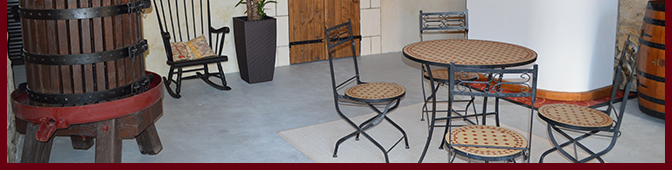
In 2015, a tasting room and an office were created in part of the buildings near the cellars. A visit, tasting, and warm welcome await you in a friendly, family atmosphere.
Aline is a wine merchant and also sells a complementary range of white, rosé, and sparkling wines, which are also available to customers.
Their son, Valentin, soon to graduate as an agricultural engineer, is considering diversifying the crops. He has already started planting new varieties...
1930-2002
Father :
Christian Pierre-Michel Caussan: Estate manager at prestigious Médoc châteaux. He inherited and lived in the family home built by his ancestors. He renovated and then expanded it for his wife and four children. He bought the winery from the Lafortune family in 1986 (who had purchased it from the Breuil family in 1984). With his son Bruno, they began transforming it, and craftsmen took over to complete the project. In 2001, Bruno, manager of EARL Caussan, bought the building that is now the EARL Caussan winery.
1907-1987
Grandfather :
Pierre-Etienne Caussan, known as Roger: Winegrower and cooperative member. He was also a cooper at a large château in the Médoc. He spent his childhood in the family home, built about in the 1850s. After his marriage, he lived in the neighboring village of Saint Germain d'Esteuil.
1878-1957
Great-grandfather: :
Pierre-Camille Caussan, known as Fernand: Winegrower and cooper. He was cellar master when the village's cooperative winery was founded. He lived his entire life in the family home, built in about the 1850s.
Théophile Caussan (Fernand's brother): Winegrower, lived in the Lussan winery. In 1940, he sold the Lussan winery to the Breuil family.
1828-1916
Great-great-grandfather:
Pierre Caussan: winegrower and stonemason. He was skilled in stonemasonry and built the Lussan winery with his own hands. With his father's help, he also built his house, located just across the road. At the time, part of the winery was intended to be habitable for future generations. The Caussan family therefore lived in the house opposite, built in about the 1850s.